Golden Retriever vs Labrador Retriever
The short answer
Golden Retrievers and Labradors are similar in many ways – especially in build and size (which is why some people mistake one for the other). I can’t count the number of times my beautiful Golden Retriever was mistaken for a Labrador.

The most notable differences between Golden Retrievers and Labrador Retrievers are their colouring and coat length.
Check out this quick guide to learn about the main differences between Golden Retrievers and Labradors. It might just help you work out which is which, but it could also be useful if you’re torn over which breed to get.
Appearance Differences Between Golden Retrievers and Labradors
These two breeds can be tricky to tell apart, (as you can see from the images above) so we compiled all the information you need to determine if you’re looking at a Goldie or a Lab.
Check out the table below for the similarities and differences in the appearances of Golden Retrievers and Labrador Retrievers:
| Golden Retriever | Labrador Retriever | |
|---|---|---|
| Colour | Cream | |
| Light golden |
Golden
Dark golden | Yellow (cream/dark yellow/fox red)
Brown
Black | | Coat | Double coat
Flat or wavy
Water resistant
Long fur
Feathered fur on their chest, belly, backs of legs, and tail | Double coat
Short, dense, and no feathering
Water resistant
Short fur
| | Weight | Male: 30 – 34 kg
Female: 25 – 32 kg | Male: 29 – 36kg
Female: 25 – 32kg | | Height | At withers:
Male: 56 – 61cm (22 – 24 ins)
Female: 51 – 56cm (20 – 22 ins) | At withers:
Male: 56 – 57cm (22 – 22.5 in)
Female: 55 – 56cm (21.5 – 22in) | | Ears | Moderate size
Set approximately level with eyes | Hang close to headSet further back | | Tail | Feathered
Long | ‘Otter like’ tail
Bushier near the base, with thinning out near the tip |
I haven’t included the head shape here – while some people think that one of them has a ‘blocky’ shaped head and the other has a longer snout, I’ve met dogs from both breeds that have these characteristics. Because of this, I don’t think it’s a useful way to accurately tell them apart.
These are three colours of Labradors that you’ll find:
And here are three of the most common colors of Golden Retrievers that you’ll see.
This is an English Cream:

And this is a Dark Golden:

And this is a Light Golden:

What Are Common Health Issues in Golden Retrievers and Labradors?

If you’re looking into either one of these breeds as your next pet you should familiarise yourself with the health issues both of these breeds may, unfortunately, be more prone to than others.
It’s not guaranteed that either breed will experience one (or more) of these issues – but they do seem to appear more commonly for them.
Health problems both Golden Retrievers and Labradors experience:
- Cancer
- Hip/elbow dysplasia
- Hypothyroidism
- Obesity
- Progressive Retinal Atrophy (PRA)
- Ear infections
- Seizures/Epilepsy
- Bloating
Health problems only Golden Retrievers seem to experience:
- Ichthyosis
- Allergies
- Subaortic Stenosis
- Degenerative Myelopathy
Health problems only Labrador Retrievers seem to experience:
- Tricuspid Valve Dysplasia (TVD)
- Exercise-Induced collapse
- Cruciate Ligament injury
- Panosteitis
- Laryngeal Paralysis
What Are the Breed Traits and Temperaments of Golden Retrievers and Labradors?

Both Golden Retrievers and Labradors are known for their incredibly loving personalities. Both make great family pets as they are calm (most of the time) and friendly. They typically get along well with children and other pets too.
But to be honest – neither breed would make a particularly good guard dog. They can be trained to bark on command or recognise their boundaries and are often protective of their families, but they aren’t naturally aggressive dogs.
Our Golden Retriever had a deep, fierce sounding bark whenever she heard someone outside. It would probably scare off anyone up to no good. But once you saw her? You’d realise she was a giant golden lovebug.
Neither of these two breeds like being left alone for too long either. They’ll get lonely and sad if they’re home alone for long periods at a time. They’ll also need plenty of mental stimulation and comfort if they are alone.
They both like nothing better than to be part of the pack snuggled up on the sofa or out adventuring with their favourite people.
What Are the Average Activity Levels of Golden Retrievers and Labradors?
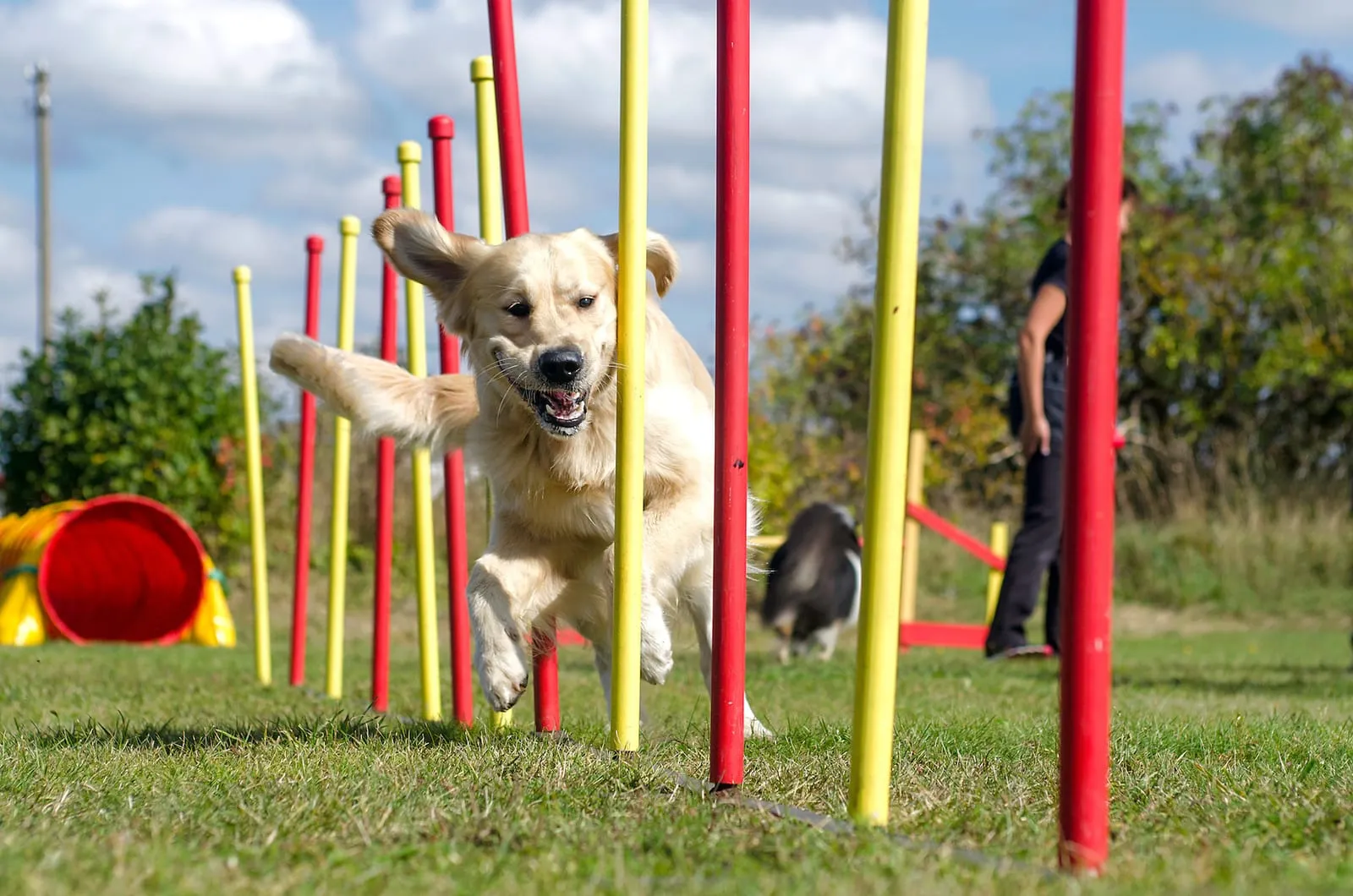
Both Golden Retrievers and Labradors were bred for sports and working.
Both of these breeds can spend the day out in the fields running, swimming, and retrieving for their owners. And they’ll do it happily all day long. In fact – they’d keep going forever because they’re people pleasers and happy to be involved.
Because of that, it’s no surprise that they’re both high-energy breeds and need to be walked and exercised for at least an hour per day. Most Goldens need at least two hours of exercise per day.
Without enough exercise, you may discover your normally well-behaved pooch has destroyed some of your lovely furniture – as they’re looking for ways to release the pent-up energy and overcome boredom.
How Easy Is It to Train Golden Retrievers and Labradors?

Both breeds are undeniably people pleasers – as soon as they understand what you want from them, they’ll be happy to oblige.
They just want to make you happy and spend their time with you. This makes them easy to train and reliable pets.
They’re both intelligent dog breeds, too.
According to this website, both breeds fall into the ‘top tier’ of smart dogs. The Golden Retriever falls in 4th place followed by Labrador Retrievers in 7th place.
What Are the Grooming Needs of Golden Retrievers and Labradors?
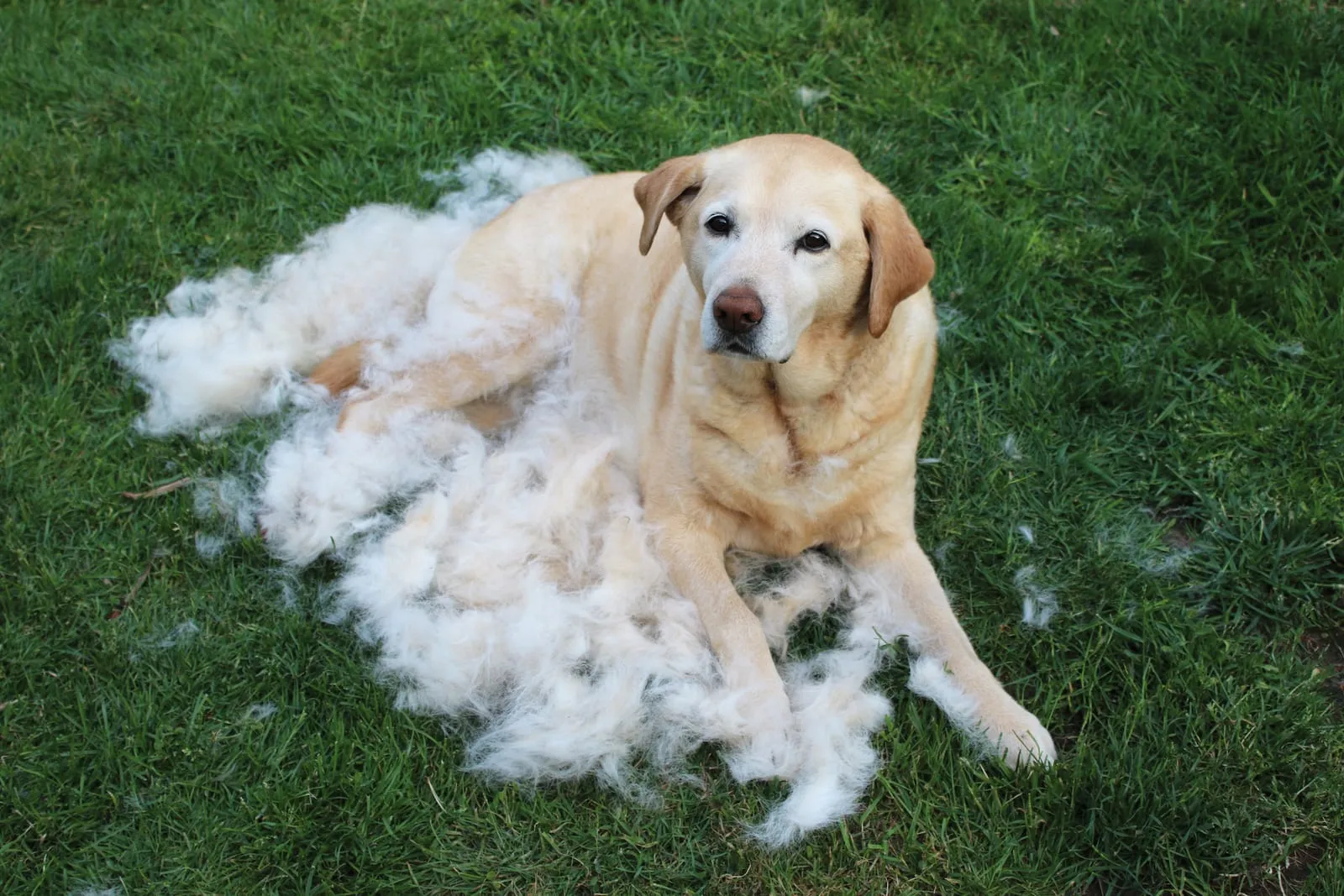
Both of these breeds shed a fair to moderate amount.
It doesn’t matter how often I vacuum our house, I’m always finding little golden tumbleweeds lurking in the corners.
Golden Retrievers need regular grooming due to their longer fur. Every 2-3 days is normally fine. I also like to trim their fur (stomach/paws/tail/back leg fluff) every month or two to keep them looking tidy.
Labradors have shorter, coarser fur which doesn’t need to be brushed as often (once a week should be fine). You also don’t usually need to trim a Labradors’ fur, as it stays quite short.
How Much Do Golden Retrievers and Labradors Bark?
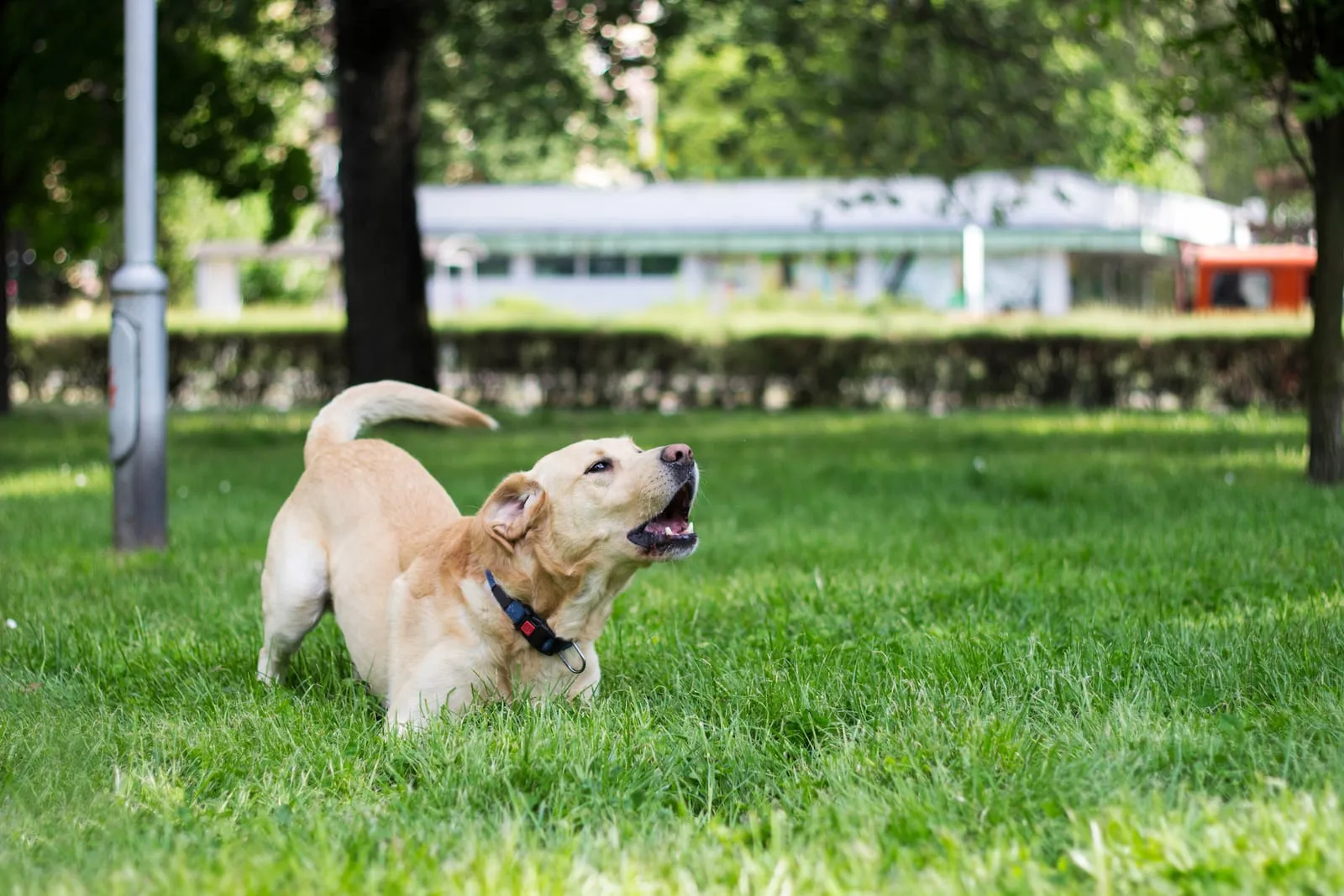
You may read online that both of these dogs fall into the mid/moderate category when it comes to how vocal they are.
However, I have met Golden Retrievers and Labradors at the complete opposite ends of this spectrum. It truly depends on the dog’s personality and any training you’ve given them.
Our Golden was a fair barker as a pup. She used to bark out of excitement, frustration, and even at her reflection in the shiny fridge door.
We taught her to bark on command via either a vocal prompt or a hand gesture. As she aged, she stopped barking almost entirely – apart from at the front door when anyone approached.
A close family member of mine has a Chocolate Labrador. She only barks when someone rings the doorbell. She wasn’t trained this way – it’s just her personality.
All dogs are different in terms of how vocal they are but the beauty of Goldens and Labradors is that they are both very trainable (which is good news for your neighbours!)
What Jobs Are Golden Retrievers and Labradors Used For?

Both breeds have great temperaments for being working dogs. Both are regularly used as guide dogs for the visually impaired, assistance dogs & therapy dogs. This is because of their excellent trainability, placid nature, and pure desire to please.
They are both still used to assist on hunts to retrieve game – although Labradors are more frequently used for this role.
You’ll also see both breeds on the screen. Films like Marley and Me, the Buddy films, and a bunch more have these gorgeous breeds as stars.
Are Golden Retrievers or Labradors Better With Kids?
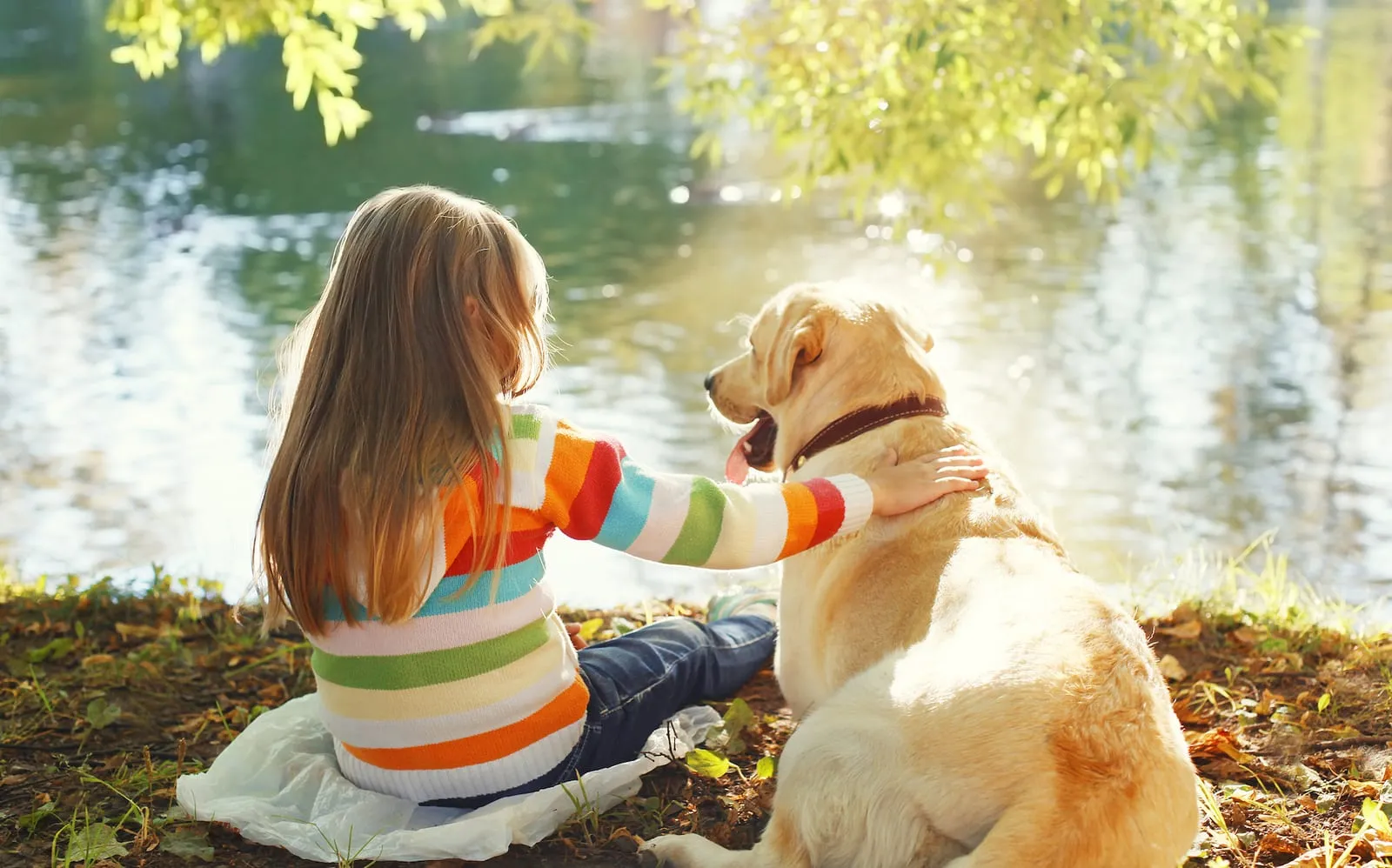
As with all dogs, they are individuals with their own personalities and preferences.
Labs and Goldens are both great family pets and both are good with children. They share the qualities of being friendly, patient, and loyal dogs which is a perfect combination for a family pet.
Labradors tend to fare slightly better with loud, boisterous children as Golden’s can be a little more sensitive to it. But both would be lovely additions to your family and prove themselves to be loyal and loving companions.
What Are the Life Expectancies for Golden Retrievers and Labradors?

A healthy Golden Retriever or Labrador can be expected to live to around 10 to 12 years.
But this varies between individual dogs. Unfortunately, both breeds will sometimes get a disease that cuts their life shorter than average. On the opposite hand, sometimes you’ll find these breeds living into their late teens – it’s unpredictable.